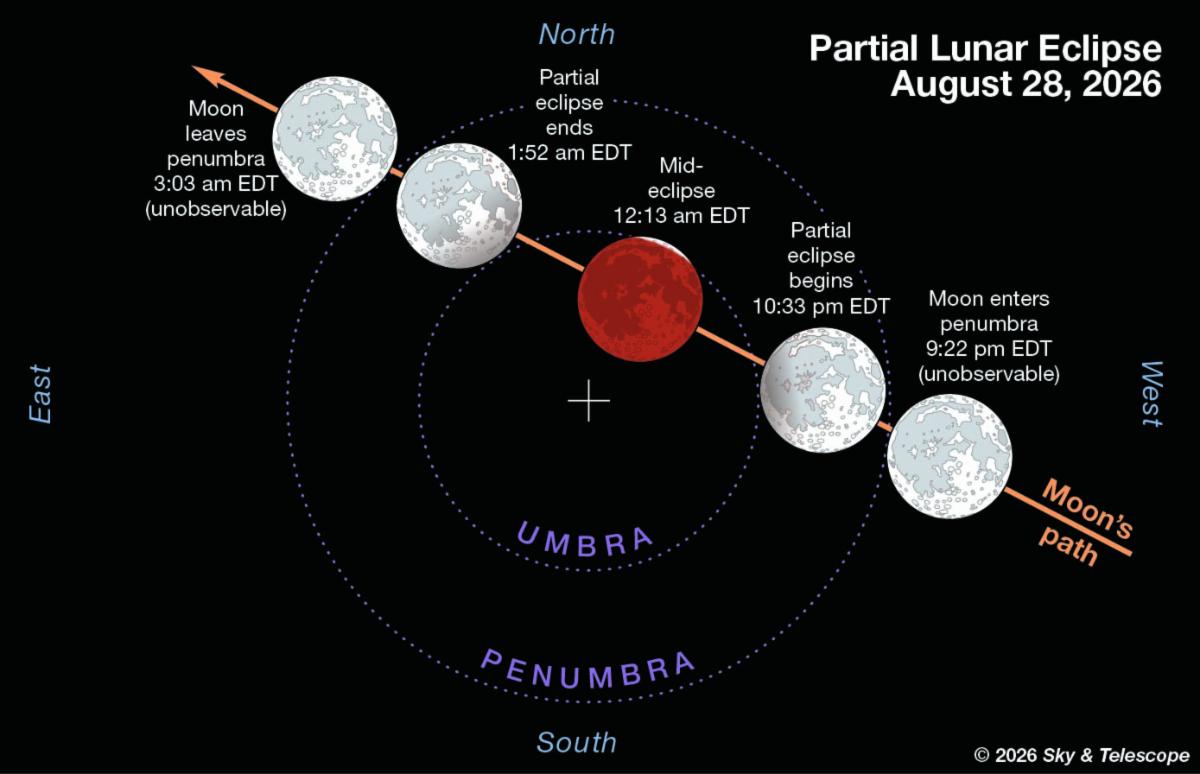
At maximum eclipse, 93% of the lunar disk will enter the umbra, the darkest portion of Earth's shadow. Only a thin sliver of the Moon will remain outside, while the rest of the lunar disk takes on shades of deep orange or red. Virtually all of the contiguous U.S., the eastern two-thirds of Canada, and all of South America will have an opportunity to watch the eclipse. Better yet, you don't need any special equipment or eye protection to enjoy it. Binoculars or a small telescope can make the view even more striking.
The eclipse begins this week. Find out when to look from your location, what to watch for during each stage, and how to make the most of this nearly total lunar eclipse when you subscribe to Sky & Telescope. |